伝承型日本人タイプとは Archetype
集合的無意識という深層心理に存在する、人類に共通する普遍的な心理的構造やイメージの型を、心理学者カール・ユングは、元型(アーキタイプ)と名付けました。それは、夢や神話、芸術や宗教などに現れ、私たち人類の思考や感情の基盤となっています。
カール・ユングは、一般的に知られる「12の元型」の原案を提唱しました。ユングが直接まとめたわけではなく、ユングの提唱した概念を、後世の人々がまとめたのが「12の元型」です。
「12の元型」は、それぞれが特定の価値観や動機を持ち、個人の性格や行動に影響を与えるとされています。
・幼子(純粋な人) ・賢者 ・探検家 ・無法者(反逆者) ・魔術師 ・英雄
・恋人 ・道化師 ・普通の人(隣人) ・世話人(保護者) ・創造者 ・破壊者
これらは、日本人にも当てはめることができます。
日本の伝承・神話・昔話などの主人公や物語の流れには、人の元型(アーキタイプ)の痕跡があります。その痕跡を辿り、あなたはどのタイプが強いのかということを自覚してもらうのが、このサイトの役割です。それを、日本の伝承型『人の元型』と命名しました。
ユング心理学の「12の元型」同様、同じ人物でも様々な元型が登場します。
もっとも強い元型(アーキタイプ)が、代表的な元型となり、その人を表すと考えています。
日本の場合は独特で、それが日本に多数存在する、神社仏閣とも結びついています。神社の神々や仏閣(寺院)の仏にも関係しているのです。
また、日本の歴史上の人物とも大いに関係があるのです。
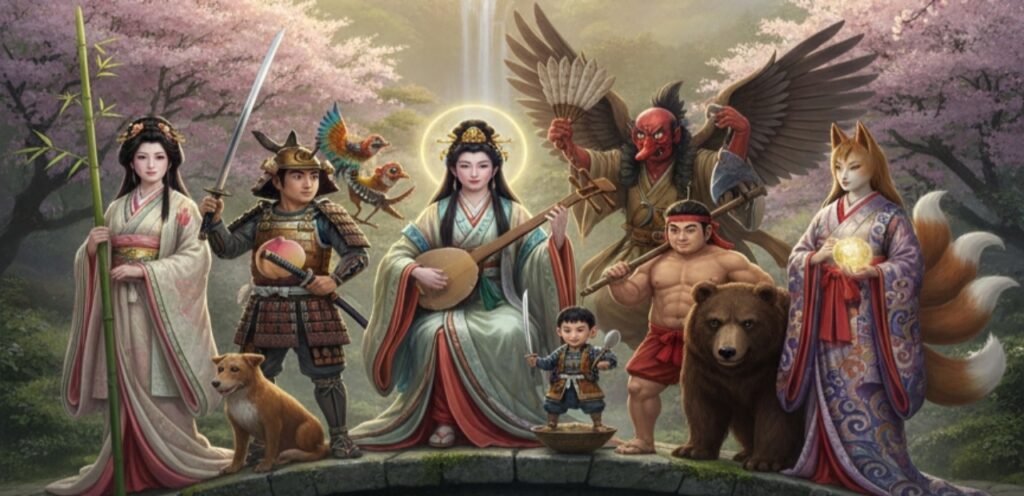
日本の代表的な伝承・神話・昔話とその主人公
・かぐや姫 乙姫 玉藻前(九尾の狐) 桃太郎
・弁天 天女
・鼻高天狗 烏天狗
・一寸法師 浦島太郎 金太郎 力太郎
さて、あなたはどの元型(タイプ)でしょうか?実は、人は役割や立場、環境などにおいて、様々な元型を持っています。
例えば、弁天でありながら、かぐや姫でもあり、天女である場合もあります。
あるいは、浦島太郎であり、桃太郎であり、鼻高天狗である場合もあるのです。
ポイントは、その元型で一番強いのが、その人の元型となるということです。
※内容は、あくまでも独自に解釈し、提案している内容です。
Archetype
What is the traditional Japanese “archetype of man”?
Psychologist Carl Jung coined the term “archetypes” to refer to the universal psychological structures and image patterns common to all of humanity that exist in the deep psychology of the collective unconscious. These appear in dreams, myths, art, religion, and more, and form the basis of our thoughts and emotions.
Carl Jung proposed the original idea of the commonly known “12 archetypes.” Jung did not compile these concepts himself; rather, the “12 archetypes” were compiled by later generations based on his concepts.
Each of the 12 archetypes is said to have specific values and motivations, and to influence an individual’s personality and behavior.
・Innocent Child ・Sage ・Explorer ・Outlaw (Rebel) ・Magician ・Hero
・Lover ・Clown ・Ordinary Person (Neighbor) ・Caregiver (Protector) ・Creator ・Destroyer
These can also be applied to Japanese people.
Traces of human archetypes can be found in the protagonists and story lines of Japanese folklore, myths, and old tales. The role of this site is to help you trace these traces and become aware of which type is strongest within you. We have named these Japanese folklore types “Human Archetypes.”
Like the “12 archetypes” of Jungian psychology, the same person can exhibit various archetypes.
It is believed that the strongest archetype becomes the representative archetype and represents that person.
The Japanese case is unique in that it is connected to the many shrines and temples that exist in Japan. This is related to the gods of shrines and the Buddhas of temples.
It also has a lot to do with historical figures in Japan.
Representative Japanese folklore, myths, and folk tales and their protagonists
- Princess Kaguya, Princess Otohime, Tamamo-no-Mae (the Nine-Tailed Fox), Momotaro
- Benten, the celestial maiden
- Nosedaka Tengu, Karasu Tengu
- Issun-boshi, Urashima Taro, Kintaro, Chikarataro
So, which archetype (type) are you? In fact, people have various archetypes depending on their role, position, environment, etc.
For example, a person may be Benzaiten, Princess Kaguya, or a celestial maiden.
Or they may be Urashima Taro, Momotaro, or Nose-Tengu.
The key point is that the strongest of these archetypes becomes that person’s archetype.
※The content is solely our own interpretation and suggestions.